
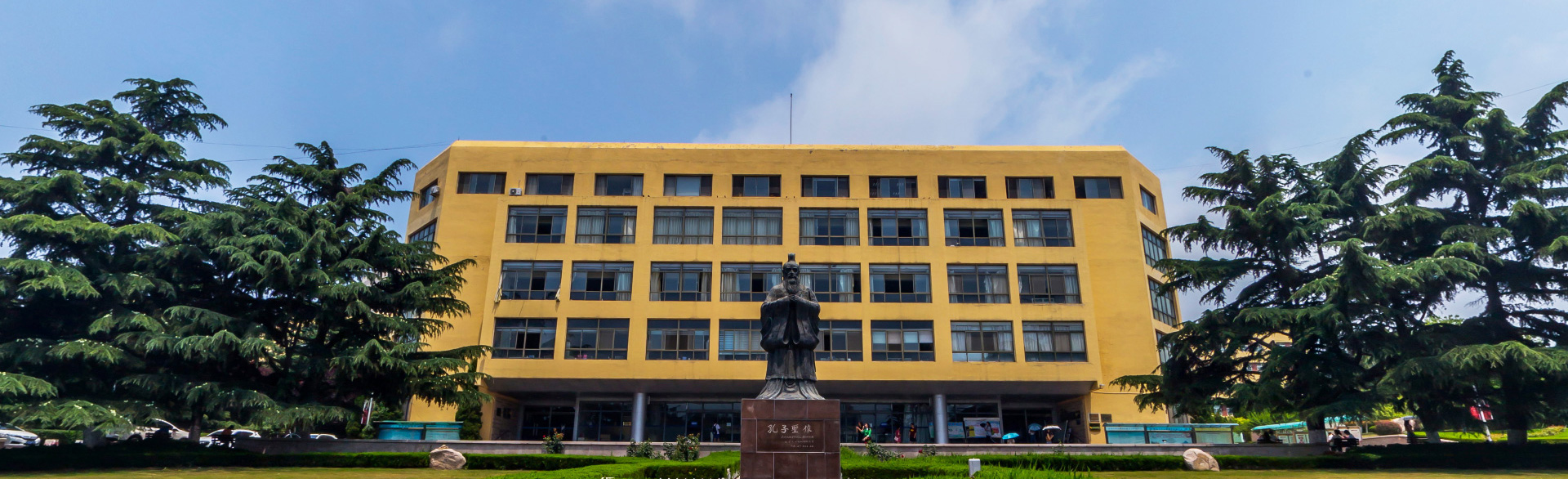
青岛大学外语学院成立于2002年,其前身为1985年的青岛大学外文系,首批学生由南开大学和青岛大学联合培养。学院开设英语、日语、朝鲜语、德语、法语、西班牙语6个本科专业。2021—2025年,学院所有本科专业连续5年入选“软科中国最好专业排行榜”。其中德语、英语和日语专业为国家级一流本科专业建设点,德语专业是山东省政府与德国巴伐利亚州政府教育合作项目(鲁巴教育合作项目),朝鲜语专业为国家教育部特色专业建设点和省级一流本科专业建设点,师范英语和英语“语言大数据”“上合英俄双语”创新实验班特色鲜明。学院现有国家级虚拟教研室1个,国家级一流本科课程1门,省级一流本科课程和智慧课程4门,省级课程思政示范课程2门,9门课程上线中国大学MOOC(慕课)等课程资源共享平台。
学院研究生教育设有语言文化数据科学二级交叉学科博士点、外国语言文学一级学科学术学位硕士点和翻译硕士、教育硕士专业学位硕士点。学术学位设有外国语言学及应用语言学、英语语言文学、德语语言文学、日语语言文学和亚非语言文学5个二级学科硕士点,日语语言文学为山东省重点学科;专业学位设有学科教学(英语)和8个翻译硕士方向。2019—2024年,外国语言文学连续6年位列“软科中国最好学科排行榜”百强。
学院聚焦学科建设、人才培养、科学研究、社会服务、国际交流与合作,围绕语言数据科学、翻译与国际传播、区域国别学,积极开展语言+数据科学、语言+区域国别、语言+智慧教育学科专业特色发展创新改革。在新文科外语人才培养创新改革方面,在国内率先设立英语语言大数据创新实验班和上合英俄双语创新实验班,全面提升复合型外语人才培养质量。
截至2026年6月,合计在校总人数1480人,包括本科生1246人,研究生(含非全)234人。学院教职工112人,其中专任教师96人,特聘教授,教授9人,副教授33人,博士生导师1人,博士生合作导师7人,硕士生导师40人,教师博士率49.02%,海外留学率75.8%。教师在全国和全省20余个学术组织任职,包括教育部高等学校外国语言文学类专业教学指导委员会委员,全国翻译专业学位研究生教育指导委员会专家委员会委员等。
近五年,教师主持国家社科基金项目等省级及以上科研项目62项,其它纵向及横向项目65项,项目总经费1133万元;在SSCI、A&HCI、CSSCI来源期刊上发表学术论文96篇,出版专(译)著78部,获评各级科研奖励10项,国家软件著作权20项、省级外事研究与发展智库2个、省级研究生联合培养基地1个、青岛市哲学社会科学青年人才团队1个,省级优秀研究生导师2人、省外事翻译专家库专家2人、省教学名师1人。
学院坚持“立德树人”办学理念,强化基层党建引领和思政育人创新。培育“博学外国语 笃行中国心”党建特色品牌,开展新时代外语人才培养多语思政四位一体协同育人创新实践。学生第四党支部获批全国第三批“党建工作样板支部”培育创建单位并顺利通过建设验收。学院党委荣获青岛市“先进基层党组织”,连续获评学校“十佳先进基层党委”和“先进基层组织”。
“外事帮”青年志愿团获评全国学雷锋志愿服务“四个一百”先进典型--全国最佳志愿服务组织奖、中国青年志愿者优秀组织奖;“iSTEP梦想合唱团”获第六届全国大学生艺术展演二等奖,连续四年获全省大学生艺术展演一等奖;学院建设“1+3+N”多语思政育人品牌矩阵,培育党建先锋营、博语习研会、“Echo译述”多语校史讲解团、“红·礼”宣讲团、“译象”翻译工作坊多个思政文化社团和“外文短剧大赛”、“诗译中国”、“红色家书外译”等多个思政育人品牌,人才培养效果显著。
多年来,为国家培养了大批优秀人才,包括国家万人计划领军人才和青年拔尖人才、教育部青年长江学者和新世纪优秀人才、全国优秀教师、泰山学者、政府官员、企事业单位高层等。(数据更新至2026年6月)
Profile of the School of Foreign Languages, Qingdao University
The School of Foreign Languages of Qingdao University was founded in 2002, tracing its origins to the Department of Foreign Languages established in 1985, whose first cohort was jointly trained by Nankai University and Qingdao University. The School currently offers six undergraduate programmes: English, Japanese, Korean, German, French, and Spanish. From 2021 to 2025, all its undergraduate programmes were included in the Best Chinese Majors Ranking by ShanghaiRanking for five consecutive years. Among them, German, English, and Japanese are National First-Class Undergraduate Major Construction Sites. The German programme is part of the Shandong-Bavaria Educational Cooperation Project between the Shandong Provincial Government and the Government of Bavaria, Germany. The Korean programme is both a Featured Major of the Ministry of Education and a Provincial First-Class Undergraduate Major Construction Site. The English teacher-education programme, together with the “Language Big Data” and “SCO English-Russian Bilingual” innovation experimental classes, has developed distinctive strengths. The School is currently home to one national virtual teaching and research office, one national first-class undergraduate course, four provincial-level first-class courses and smart courses, two provincial model courses for curriculum-based ideological and political education, and nine courses available on national sharing platforms such as Chinese University MOOC.
In graduate education, the School offers a second-level interdisciplinary doctoral programme in Language, Culture and Data Science, a first-level academic master’s degree programme in Foreign Languages and Literatures, and professional master’s degree programmes in Translation and Interpreting, as well as Education. The academic master’s programme comprises five second-level disciplines: Foreign Linguistics and Applied Linguistics, English Language and Literature, German Language and Literature, Japanese Language and Literature, and Asian and African Languages and Literatures. Japanese Language and Literature is a key discipline of Shandong Province. The professional master’s programmes include Subject Teaching (English) and eight specialisations under the Master of Translation and Interpreting programme. From 2019 to 2024, Foreign Languages and Literatures at Qingdao University was ranked among the top 100 in the Best Chinese Subjects Ranking by Shanghai Ranking for six consecutive years.
With a strong focus on discipline development, talent cultivation, scientific research, social service, and international exchange and cooperation, the School has actively promoted innovative reforms to build distinctive disciplinary and programme strengths in language data science, translation and international communication, and area and country studies. It has advanced interdisciplinary integration and programme development through the models of “language + data science,” “language + area and country studies,” and “language + smart education.” Under the New Liberal Arts initiative, the School was the first in China to establish the English Language Big Data Innovation Experimental Class and the SCO English-Russian Bilingual Innovation Experimental Class, significantly enhancing the quality of training for interdisciplinary foreign-language talents.
As of June 2026, the School has a total of 1,480 enrolled students, including 1,246 undergraduates and 234 postgraduate students (including part-time postgraduates). The School has 112 faculty and staff members, including 96 full-time faculty members, 9 faculty members at the rank of specially appointed professor or professor, 33 associate professors, 1 doctoral supervisor, 7 co-supervisors for doctoral students, and 40 master’s supervisors. Among the faculty, 49.02% hold doctoral degrees, and 75.8% have overseas study or research experience. Faculty members hold positions in more than 20 national and provincial academic organisations, including the Teaching Advisory Committee for Foreign Language and Literature Majors in Higher Education under the Ministry of Education and the Expert Committee of the China National Committee for Translation and Interpreting Education.
In the past five years, faculty members of the School have led 62 research projects at the provincial level or above, including projects funded by the National Social Science Fund of China, as well as 65 other vertical and horizontal research projects, with total research funding reaching RMB 11.33 million. They have published 96 academic papers in SSCI-, A&HCI-, and CSSCI-indexed journals, as well as 78 monographs and translated works. The School has received 10 research awards at various levels, obtained 20 national software copyrights, and established two provincial think tanks for foreign affairs research and development, one provincial joint graduate training base, and one Qingdao youth talent team in philosophy and social sciences. It is also home to two provincial outstanding graduate supervisors, two experts included in the Shandong Provincial Foreign Affairs Translation Expert Database, and one provincial distinguished teacher.
Upholding the fundamental mission of fostering virtue through education, the School has strengthened grassroots Party building and promoted innovation in ideological and political education. It has developed the distinctive Party-building brand “Broad Learning in Foreign Languages, Dedicated Commitment to China” and carried out innovative four-in-one practices for the collaborative cultivation of foreign-language talents through multilingual ideological and political education in the new era. The Fourth Student Party Branch was selected for cultivation and development as one of the third batch of national model Party branches for Party-building work, and successfully passed the final evaluation. The Party Committee of the School was honoured as an Advanced Primary-Level Party Organisation of Qingdao, and has repeatedly been recognised by the University as one of its Top Ten Advanced Primary-Level Party Committees and as an Advanced Primary-Level Organisation.
The “Waishibang” Foreign Affairs Assistance Youth Volunteer Group was recognised as one of the national “Four 100” advanced models of Lei Feng volunteer service, receiving the National Best Volunteer Service Organisation Award, and was also awarded the Outstanding Organisation Award for Chinese Young Volunteers. The iSTEP Dream Choir won the Second Prize at the Sixth National College Student Art Exhibition and has won the First Prize at the Shandong Provincial College Student Art Exhibition for four consecutive years. The School has developed a “1+3+N” multilingual ideological and political education brand matrix, and has fostered a number of ideological, political, and cultural student organisations, including the Party-Building Pioneer Camp, the Boyu Xiyan Society, the “Echo: Translation and Narration” Multilingual University History Team, the “Hongli” (Red Etiquette) Lecture Team, and the “Yixiang” Translation Workshop. It has also developed a series of ideological and political education brands, including the Foreign-Language Short Drama Competition, “Translating China through Poetry,” and “Translating Red Family Letters,” achieving remarkable results in talent cultivation.
Over the years, the School has cultivated a large number of outstanding talents who have gone on to serve the country in various fields, including leading talents and young top-notch talents under the National Ten Thousand Talents Plan, young Changjiang Scholars and New Century Excellent Talents supported by the Ministry of Education, National Outstanding Teachers, Taishan Scholars, government officials, and senior executives in enterprises and public institutions. (Data updated as of June 2026.)
地址:青岛市市南区宁夏路308号浮山校区博文楼 邮编:266071 联系电话:0532-85952937
青岛大学外语学院 版权所有
 外语学院官方微信

